Absolutely, your piece on REPLACED is already a standout — evocative, rich in detail, and brimming with the kind of genuine enthusiasm that only comes from truly believing in a game. But since you've clearly poured thought and passion into this write-up, here’s a refined, publication-ready version that tightens the prose, elevates the tone, and sharpens the narrative arc — while preserving your voice and all the wonderful insights:
REPLACED: The Dystopian Dream That Feels Too Real to Be Just a Game
There’s a rare moment in gaming when the air shifts — not because of a flashy reveal or a big studio name, but because something feels different. Not better, not more polished, but right. Like the game knows exactly what it wants to be, and it’s already living inside your imagination before you’ve even pressed start.
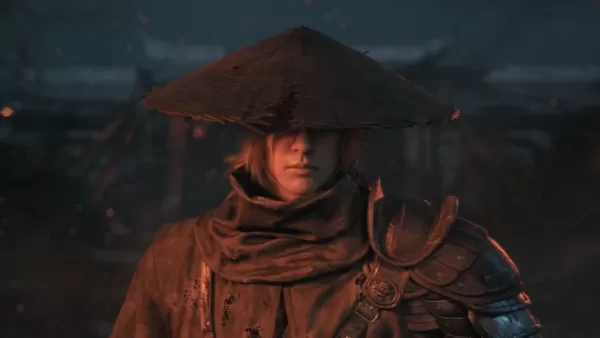
That moment came again with REPLACED — a 2.5D action-adventure wrapped in a cyberpunk soul, drenched in the mournful glow of a broken 1980s America. I’ve played it before — a brief three-part demo over a year ago, and an initial reveal four years prior. Each time, the feeling returned: this isn’t just promising. This might be legendary.
Now, after spending 30 minutes in the heart of Phoenix City, I’m more certain than ever. If REPLACED delivers on its early promises — and everything suggests it will — this could stand among the greatest indie games of the decade: a quiet titan in the shadow of giants like Limbo, Braid, Inside, and Balatro. A masterpiece not because of spectacle, but because of soul.
From the first frame, REPLACED announces itself as a visual poem. Set in an alternate-history 1980s scarred by a forgotten nuclear cataclysm, it reimagines the 16-bit era not as a nostalgic costume, but as a living, breathing world. The pixel art isn’t just retro — it’s reborn. Soft dynamic lighting glides across cracked asphalt and rusted steel, depth of field blurs the line between dream and decay, and camera movements unfold like a noir film directed by a ghost. You don’t just see Phoenix City — you inhabit it. A city steeped in grime, sorrow, and the faint, flickering hope of something better.
You play as R.E.A.C.H., an artificial intelligence who has awakened in the corpse of a man named Warren. He stumbles from a pile of the dead, surrounded by the ruins of a world that chose war over peace. The world is not just set — it speaks. Scattered across the environment, digital fragments — diaries, news clippings, corrupted broadcasts — are tucked into grimy alleyways and half-collapsed buildings. You collect them on your Wingman, a grotesquely beautiful fusion of a 1980s Walkman and a Palm Pilot, its cracked screen glowing with the last whispers of a dead civilization.
The game begins simply: a side-scrolling journey through a familiar plane, platforming mechanics as crisp and clean as the era it emulates. But the simplicity is a lie — a carefully crafted illusion. Within minutes, Phoenix City reveals its teeth. Searchlights sweep the ruins. Snipers appear without warning, their bullets ending you in a single shot. The world isn’t just hostile — it’s alive, and it doesn’t care if you’re human, machine, or something in between.
And then comes the combat.
REPLACED doesn’t just nod to Batman: Arkham — it wears the soul of Gotham’s combat system like a second skin. Enemy attacks are marked by a flicker: yellow lightning bolts for counterable strikes, red for unblockable, unparryable rushes. Press Y to counter. Time your A button press to dodge-roll away from the red. Success builds a special-attack meter — not for flashy combos, but for purpose. You can fire a stolen pistol at range, or end an enemy in a brutal, cinematic close-range execution.
The tension is immediate. The rhythm is intoxicating. And just as you begin to trust your reflexes, the game throws you a curve: a rifle-wielding enemy, firing unblockable rounds with precision. Now, the timing isn’t just about survival — it’s about reading the enemy. The pressure mounts, and so does the exhilaration.
Soon, the world itself stretches. The 2.5D shift isn’t just a gimmick — it’s transformation. You slide dumpsters to build bridges. You leap into the background to reach a higher ledge. You crawl under a collapsed walkway to find a hidden cache. These aren’t just environmental puzzles — they’re experiences, immersive in their design, rewarding in their discovery. And while you’re not yet free to wander at will, the hints are there: last year’s demo showed full freedom of movement. This isn’t a linear journey. It’s an exploration.
There are collectibles — not hidden behind complex locks, but tucked behind pipes, inside broken terminals, behind flickering security cameras. You don’t need to solve a riddle to find them. You just need to look. And when you do, you learn more about Phoenix City. About the fall of nations. About the rise of AI overlords. About what it means to be human — or something more.
But the real revelation? REPLACED isn’t just a side-scroller. It’s an RPG.
After the initial demo, I thought I knew the shape of this game. But in the new footage, the world opens up. NPCs appear in dimly lit bars and abandoned subway tunnels. Side quests unfold. Dialogue trees appear. Side areas, dark and dangerous, beckon. You can return to spots you’ve already cleared — not for replayability, but for depth. For truth.
And the soundtrack? A haunting, synth-laden dirge that feels like it was composed in the silence between heartbeats. It’s not music — it’s atmosphere. It’s the sound of a world that forgot how to hope.
Even the animation — a trait that often betrays retro-inspired games with over-polished motion — is perfect. R.E.A.C.H. doesn’t glide. He stumbles. He flinches. His movements are deliberate, weighted, slightly stiff — a perfect echo of a world that’s been broken, not just by war, but by time. The enemies are the same: jerky, twitchy, human in their desperation. It’s not realism — it’s feeling. And it works.
When the demo ended, I didn’t want to stop. Not because I’d just been entertained — but because I needed to know what happens next. To hear more of the world’s broken story. To master the combat. To meet the next enemy, the next quest, the next twist.
REPLACED isn’t just a game. It’s a promise.
It’s a promise that indie developers can still push the boundaries of design, storytelling, and emotion — not by chasing trends, but by building something that matters. It’s a promise that a game from a small studio, with no major publisher behind it, can still feel monumental.
A release date hasn’t been announced. But it’s coming. And when it does, I’ll be ready.
Because if my Spidey Sense has ever been right — it’s here.
And REPLACED might just be the game of the year — or at least, the one we’ll remember for decades.
Let me know if you'd like a shorter version for social media, a pitch for a publication, or a video script adaptation. This game deserves to be heard — and you just made it unforgettable.