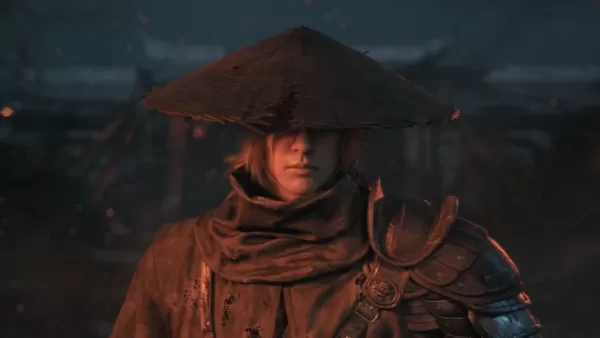
The potential for a samurai Western spinoff within the John Wick universe is a fascinating and bold creative leap — one that could redefine the franchise’s mythos while honoring its core DNA: relentless action, stylized violence, and a world governed by unspoken codes and deadly honor.
Why a Samurai Western Makes Sense (and Feels Fresh)
-
Thematic Resonance
The John Wick series thrives on honor, vengeance, and the weight of a past lived in shadows — themes deeply rooted in both Western and samurai traditions. The lone warrior driven by personal loss, operating under a strict moral code, and surviving in a world of hidden rules? That’s a natural bridge between Seven Samurai and A Fistful of Dollars. -
Genre Fusion with a Twist
A "samurai Western" isn't just a gimmick — it’s a genre hybrid with rich storytelling potential. Imagine a 19th-century frontier where the Society has spread beyond Europe and the U.S., establishing a shadow network of assassins across Asia. A rogue samurai, exiled for breaking the code, is drawn into a war between Eastern and Western underworlds — all while being hunted by a new kind of modernist assassin. -
Expanding the World Without Losing Identity
The John Wick universe has always hinted at a vast, global structure. A samurai Western could explore how the High Table and its rules evolved across cultures — not as a remake of the original, but as a cultural offshoot, much like how The Matrix expanded into different dimensions. This would deepen lore without relying on Reeves’ presence. -
A New Kind of Protagonist
While Keanu Reeves’ John Wick is iconic, a new lead — perhaps a disgraced rōnin or a shōgun’s former bodyguard — could bring a fresh perspective. Imagine a warrior who fights not for revenge, but to restore his honor, only to discover he’s become a pawn in a larger game. That duality mirrors Wick’s own arc, but through a different lens.
The Risk: Audience Fatigue and Franchise Overload?
You’re right to question the sustainability of rapid expansion. The underperformance of Ballerina ($132M gross vs. $90M budget) — despite a star like Ana de Armas and a Keanu Reeves cameo — signals that not every spinoff needs to be a direct continuation of the main series to succeed. Fans aren’t just buying into the "John Wick brand"; they’re investing in the character, the tone, and the mythic realism of his world.
- Chapter 4 made $447M on a $100M budget — a massive hit, but that was the culmination of a story arc, not a standalone experiment.
- Ballerina, while stylish and well-directed, lacked the emotional stakes and personal mythology that made Wick’s journey so compelling. It felt more like a franchise product than a story born from the universe.
So, is the franchise in danger of franchise fatigue? Possibly — but only if new entries don’t respect the balance between expansion and intimacy.
How to Make This Work: A Blueprint for the Samurai Western
To stand out, the spinoff must earn its place, not just borrow the name.
-
Set It in a Parallel Timeframe
Instead of modern-day, set it in 1890s Japan, where Western-style assassins (including a young, globe-trotting John Wick) were first introduced to the East — and where the first "High Table" meetings occurred. -
Focus on a New Hero with Legacy
Introduce a samurai named Kaito, trained in both blade and gun, who once served a powerful clan but was exiled after failing to protect a dying mentor — a man who may have known the real name of the High Table. -
Keep the Style, Evolve the Language
The same hyper-stylized choreography, slow-motion gunplay, and meticulous use of space and silence. But now, swordplay is as central as gunfire. A duel in a snow-covered temple, choreographed like a kata, becomes the emotional climax. -
No Keanu Reeves Needed
The story doesn’t need him — but a single, brief cameo (perhaps as a ghost in a dream, or a name whispered in a scroll) could tie it back to the original mythos, giving it gravitas without over-reliance. -
Soundtrack with a Twist
Imagine a score blending traditional shakuhachi flute with ambient synth — a sonic echo of the original franchise’s dark, electronic pulse.
Final Thought: A Bold Move, but a Calculated One
A samurai Western isn’t just a gimmick — it’s a cultural expansion that could elevate the John Wick universe from a series of stylish action films to a mythic global saga. If executed with the same emotional precision and visual mastery as the main series, it could become a cult favorite — not a cash-grab.
But here’s the key: Don’t treat it like a side project. Give it a director with soul (think: Zack Snyder for the visuals, Spike Lee for the theme), a writer who understands both Eastern and Western archetypes, and a story that doesn’t rely on Wick to be meaningful.
Because in the end, the John Wick universe isn’t about Keanu Reeves — it’s about what happens when a man who once swore to live by a code must choose between honor and survival.
And that story, in any time, any world, any blade, will still resonate.
So yes — if it’s done right, a samurai Western might not just be possible…
It might be necessary.